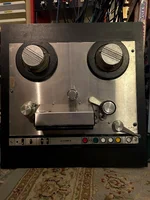
Ampex AG-440B-8 Story...

  • Thread starter Thread starter sweetbeats
  • Start date Start date
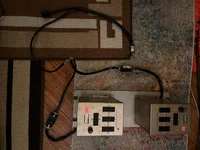
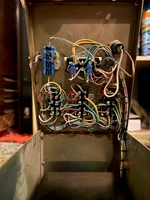
Well I’m going to need a much bigger picture of what you have going on here, not just a picture of a round twist-loc connector and a blurred out background showing your signal electronics power supplies…they appear to be mounted to a rack panel, which is not factory AG-440-8, and it’s hard to tell but it looks like a bunch of hinky wiring. AC power to the signal electronics power supplies should come from pins 1 & 2 of J606S on the control box assembly, an 8-pin Cinch Jones connector. I can’t recall how it splits to both supplies from J606S, but that’s where power is supposed to come from. You say “There's continuity between [the 2-pin twist-loc] and the power supplies”, and then leap to the assumption it needs to be plugged in for the signal electronics supplies to get line power…how did you get there? You discovered continuity between the connector and the supplies…to where? Where does it connect? I can’t help without details, and in the meantime let’s get a full visual on your machine because your power supply tray is very not factory. Please post many pics of your machine.
 
I don't know why I made the assumption that round connector was going to magically power the signal electronics ps. Reading back I can see why that doesn't make sense. I think what I was trying to say was that there's continuity between the round connecter and the fuse holder on the signal electronics ps. The round connector itself, I have no idea what it connects to. There's no where on the machine for that to plug into. It's just attached to the wiring between J606S and the signal electronics ps flying in the studio wind... All this said, I've made some advances since my last post.

I was able to figure out that ac power is indeed making its way from J606S to the signal electronics ps, but it's stopping there, blowing fuses in both the psu's. So it seems something is going on in these boxes. I just had them rebuilt, though the tech that did it only had the boxes, not the rest of the unit. So they weren't able to test it out. And I'm a novice when it comes to circuitry. But if you can advise me, I'm down to learn and give it a shot.

In addition to this, the buttons on the transport work except for rewind. I haven't dived into this yet but wanted to add that in here.

The tape machine isn't racked up, it didn't come with a cart. I've been on the lookout for one for several months, but no dice. The plan is to build one once I get it running. I've got some sketches / measurements made.

On the line amps, I recapped c32 on all 8 record cards as advised. I went ahead and bought caps for the rest of the cards but holding off on doing that until I know what's up with the machine. I have found those old parts are what make these machines sound great. If they're working, I'd rather leave them in.

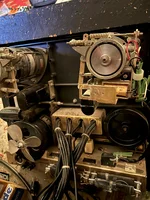
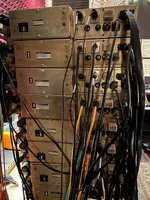
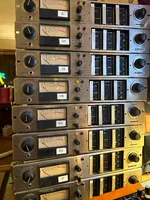
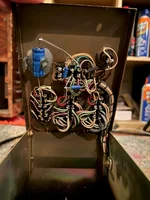
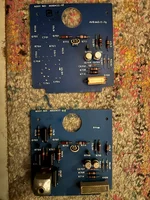
Here's some more detailed pics of the machine. I can upload more if needed (y)
 

Attachments

  • IMG_6223.webp
    IMG_6223.webp
    1.4 MB · Views: 29
  • IMG_6238.webp
    IMG_6238.webp
    746.9 KB · Views: 27
  • IMG_6237.webp
    IMG_6237.webp
    628.2 KB · Views: 24
  • IMG_6236.webp
    IMG_6236.webp
    656.6 KB · Views: 32
  • IMG_6233.webp
    IMG_6233.webp
    1.1 MB · Views: 29
  • IMG_6232.webp
    IMG_6232.webp
    1.2 MB · Views: 26
  • IMG_6231.webp
    IMG_6231.webp
    1.4 MB · Views: 27
  • IMG_6228.webp
    IMG_6228.webp
    833.2 KB · Views: 30
  • IMG_6227.webp
    IMG_6227.webp
    1,011.7 KB · Views: 27
  • IMG_6226.webp
    IMG_6226.webp
    1.6 MB · Views: 26
Annnnnd a few more...
 

Attachments

  • IMG_6224.webp
    IMG_6224.webp
    770.9 KB · Views: 26
  • IMG_6225.webp
    IMG_6225.webp
    1 MB · Views: 23
  • IMG_6230.webp
    IMG_6230.webp
    1.2 MB · Views: 28
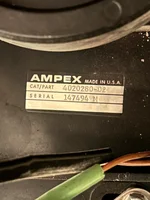
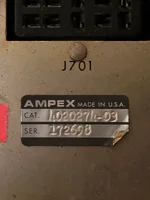
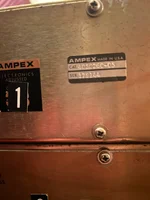
I have a lot of comments, but first can you post pics of one of the part number plates on the back of one of the signal electronics modules, and also the one on the underside of the transport?
 
Sure np

Are these the part number plates you're referring to?
 

Attachments

  • IMG_6242.webp
    IMG_6242.webp
    382.7 KB · Views: 24
  • IMG_6244.webp
    IMG_6244.webp
    351.7 KB · Views: 27
The first one is the transport, and yes that’s what I was wanting to see. The second one is not the signal electronics module. That’s the power supply. What I’m looking for is the former. Actually it looks like, from another one of your pictures, most of the signal electronics modules are 4020260-05. Can you post what the part numbers are of the 2 or 3 modules that are different?

Do you have the service manuals? Both the standard AG-440B as well as the AG-440B-8 supplement?

What test equipment do you have? Please be specific.

What is your experience troubleshooting and repairing electronic equipment?
 
Ah gotcha I see

It looks like they're all 4020260-05 except the 4th module which is 4952201-03

I have pdf's of the service manual as well as the supplement for the 440-8 I believe I grabbed off this on thread from the earlier pages.

Test equipment... Not a whole lot, really just a fluke 8060a multimeter. The MRL for this machine should be arriving soon.

My experience trouble shooting and repairing electrical equipment is pretty minimal. I've built some gear from kits (Hairball Audio 1176, AML 500 series DI, API VP26) for my studio and a lot of cables and that's probably the extent of it. I replaced the relays on my old Tascam MS-16 years ago.

What are you thinking about the machine?
 

Attachments

  • IMG_6245.webp
    IMG_6245.webp
    849.9 KB · Views: 24
  • IMG_6246.webp
    IMG_6246.webp
    976.7 KB · Views: 21
  • IMG_6247.webp
    IMG_6247.webp
    712.9 KB · Views: 25
  • IMG_6248.webp
    IMG_6248.webp
    419.8 KB · Views: 21
  • IMG_6249.webp
    IMG_6249.webp
    557.5 KB · Views: 21
So I was relieved the transport part number is actually the 1” transport. I occasionally see people trying to pass a 1/4”~1/2” transport off as a 1” transport after some modifications; not a good idea. So you have the correct 1” transport, but it must have been a parts donor unless you have additional parts and assemblies not pictured. If not, you have some work cut out for you.

I don’t see the Power Boost or Torque Delay modules, which help the transport which was not designed to handle 1” tape cope with the extra mass. The Power Boost assembly usually sits between the reel motors mounted underneath the transport. The Torque Delay module mounts above the signal electronics power supplies at the rear of the factory trolley. Without these tape speed won’t ramp properly…will take much longer for tape speed to stabilize when going from STOP to PLAY. There may be other issues as well.

Of greater concern is the absence of the scrape flutter idler in the headblock assembly area, and the fact the factory viscous-damped reel idler flywheel is replaced with a standard static flywheel. The absence of either of these will likely have an audible impact on the wow & flutter performance of the machine…both of them being missing is not good, particularly the scrape flutter idler.

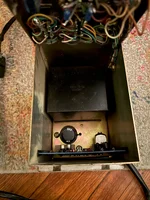
IMHO whoever did the recap on the power supplies did you a disservice. The main filter cap, a 2,000uF part, the one down in the chassis next to the transformer (as opposed to the secondary filter up in the lid), from the factory is a very high quality computer-grade screw-terminal capacitor. They continue to measure in-spec even at this age. When they are being replaced, they should, again IMO, be replaced with an equivalent quality part such as a Mallory CGS series cap. It appears your tech replaced it with a standard leaded small can part. This will not perform like the original. Each to their own but I would never do that on an assembly like this.

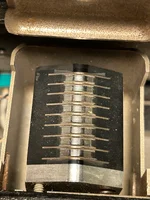
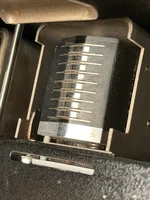
I’d need to see better pictures of the heads, but the record head looks pitted and like there is a serious wrap angle issue; wear pattern is not perpendicular to the longitudinal axis of the head…the reproduce head also looks pitted? Very hard to tell because the pictures are not in good light and somewhat out-of-focus.

So I think you have what’s left of a scavenged AG-440B-8, and a power supply rack from an MM-1000 was used to make up for missing supplies…I’m not trying to be a black rain cloud, but also don’t want to sugar-coat things. On the plus side you at least have all the electronics, plugin amplifier cards, power supplies, and an actual AG-440-8 transport with the rotary guide and you have the headblock assembly and head cable box assembly…you’re just missing the Power Boost and Torque Delay assemblies as well as the viscous-damped reel idler flywheel and scrape flutter idler, and your electronics power supplies have been a bit emasculated.

As to your current problem, you’ve got some electronics experience so that’s good, but it may be a bit of a tall climb in front of you and I can’t commit to repairing your machine over the internet. There are too many questions marks for me about what’s been messed with, what’s missing, etc. I can try and offer some guidance along the way, but don’t want to reinforce any expectation that I’m going to solve any problems. I just don’t have that kind of time. With that, did the power supplies power the signal electronics modules before the power supplies were recapped?

Please share your story with this system: how long have you owned it…how did it come to you…what history do you know about it…how was its functionality/condition represented before you acquired it? This overarching picture often provides valuable information that is better known up front rather than after hours of often frustrating collaboration for both parties involved.

FWIW, if you’re interested I do have a fully-serviced and beautiful condition OEM AG-440B-8 scrape flutter idler I’d like to sell. PM me for details if you’re interested.

P.S. I’m glad you have access to the manuals. Please be as familiar with them as possible. Even if you can’t understand what all the stuff means, just get familiar with what is where…general familiarization with the contents, and maintenance procedures…study up on the section in the Supplement that goes over the differences between the 1” machine and the standard 1/4”~1/2” AG-440.
 
Last edited:
Thank you for this very thorough response. Much appreciated. And unfortunately, the machine didn't come with additional parts and assemblies :/

I'm aware of the power boost and torque delay module from the manual. I've been looking around online to see if they pop up, also exploring another transport if one pops up that's local and affordable. I also noticed the scrape flutter missing. Is it possible that this 440-8 is an earlier model before the power boost/torque delay/scrape flutter was introduced? A scrape flutter idle is def on the list of parts. I've been on the look out for this as well. If you know of someone who has parts, I'd be obliged.

As for the power supplies, the tech is coming over on Friday. He gave me all the parts that he pulled, so I can ask him to replace the main filter cap and test and hopefully get the power situation sorted. I wasn't aware of the high quality of the original ones. If there's an issue with the originals, I'll look into a Mallory CGS series cap.

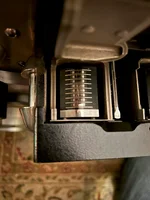
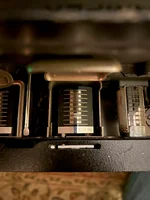
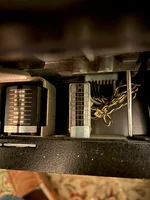
Attached are (hopefully) better and more clear pictures of the heads. I'm not seeing any gaps but was going to address them once I get the rest of the machine sorted.

Totally understand no being able to commit, I wouldn't expect that. You've provided me with a good picture of what's going on so far. For that, I'm grateful. The plan is to get as far as I can this month, then in February, I found another tech here in town that specializes in tape machines that has ampex experience. He has said he would work on it. I'm going to try to get these issues you've pointed out addressed before then.

Backstory about the machine... some friends purchased the machine around 7 years ago from a seller in DC, and it ended up going into storage. Fast forward to now, they needed space in the unit and sold it to me at a discounted price. I don't know much about the machine besides that.
 

Attachments

  • IMG_6254.webp
    IMG_6254.webp
    882.5 KB · Views: 23
  • IMG_6264.webp
    IMG_6264.webp
    944.8 KB · Views: 23
  • IMG_6262.webp
    IMG_6262.webp
    719.8 KB · Views: 25
  • IMG_6261.webp
    IMG_6261.webp
    855.1 KB · Views: 22
  • IMG_6259.webp
    IMG_6259.webp
    878.1 KB · Views: 24
  • IMG_6256.webp
    IMG_6256.webp
    721.2 KB · Views: 20
  • IMG_6255.webp
    IMG_6255.webp
    626.5 KB · Views: 21
Thanks…quick reply…not sure if you saw in my last post I actually have a serviced OEM AG-440B-8 scrape flutter idler in excellent condition I’d like to sell. I’ve had it for years and years…not sure why I’ve held onto it for so long. Maybe it was waiting for you. PM me for details if interested. More later.

IMG_8364.webp
 
Thanks…quick reply…not sure if you saw in my last post I actually have a serviced OEM AG-440B-8 scrape flutter idler in excellent condition I’d like to sell. I’ve had it for years and years…not sure why I’ve held onto it for so long. Maybe it was waiting for you. PM me for details if interested. More later.

View attachment 151559
That would be great, I just can't figure out how to send you a PM. Maybe I haven't posted enough on the forum Idk... Do you mind PM'ing me? I'm just not seeing an option from my end anywhere
 
You can probably survive without the Power Boost and Torque Delay assemblies, you’re just going to have to contend with the slower STOP to PLAY tape velocity ramp-up. I originally had concerns the transport wouldn’t actually operate without those in place…haven’t looked at the schematics on this…but you indicated the transport is working, yes? Except for REW IIRC? The first thing I always recommend if there are transport logic issues is to replace the relays on the transport control box. These are readily available as they are commonly used in everything from automation systems to bowling alley mechanicals…search for “14-pin 24V ice cube relay.” If you want to save the headache, don’t engage the madness of trying used relays or opening them up and trying to burnish contacts…just get new…avoid getting the cheapest thing you can find…you get what you pay for here. Expect to pay $10-11 each for them. I’d trust anything from Omron. If you can find hermetically sealed variants, even NOS, all the better…they last longer. But I always start there because the relays are usual suspects and if you try to resolve the issue downstream you end up chasing your tail because the relays may be intermittent. It’s best to just take that variable off the table. I’d start there and see if you are still having trouble with REW.

Test the original main filter caps before reinstalling them…capacitance and ESR. If they are suspect these are the caps I and others use as replacements:

https://www.tedss.com/2020004857

There is also a corresponding clamp mount that mounts with screws to the OEM rivet hold and then clamps the cap in place. Clean install. I can’t recall if I detail that in this thread or not with pictures. TEDSS.com may have the clamps still. I think that’s where I got them when I last bought these caps.

Thanks for the back story. That’s helps paint the overall picture. I can totally understand picking the machine up, but it is, as you know, a project. And these old Ampex machines can be costly and consuming projects.

The Power Boost, Torque Delay, viscous-damped reel idler flywheel and scrape flutter idler are not later additions. The AG-440-8 was actually introduced late in the “A” revision production run and hit the streets with all the above equipment…necessary changes to get the transport to perform competitively, since, again, it was never designed to handle 1” tape. The AG-440-8 is something of kludge, but, similar to my MM-1000, it has a “sound” and while the transport may not be elegant, it works, is reliable when gotten up to snuff, and “sounds like an Ampex”. The scrape flutter idler is a standard part of the AG-440 across the whole line from the first introduction of the line. And it makes a difference in flutter, particularly on the 1” machine. There is one standard, and an optional secondary idler that is of arguable benefit. The rollers are different diameters. The one I have is the primary standard idler. The viscous-damped reel idler flywheel is an adaptation from the film industry. Ampex used it on specific AG-300 machines, the rare MR-70, and the MM-1000…and the AG-440-8 series. You can run without it. The wow and flutter performance just won’t be to spec. Whether or not it’s audible likely depends on the program content and ears. Let me know if you want to know more about this assembly and how it works.

Heads…thanks for the additional pics…still hard to tell but that’s always the case trying to see this stuff from 2D pics. I do think both record and reproduce heads have some wrap angle issues…that means the sides of the head are not exactly perpendicular to the tape, and what ends up happening is the gap is off-center in the wear pattern on the face of the head. I’m not positive, but I think I see that on both heads. It impacts HF performance and also shortens the life of the head because if you relap the head (which is the only way to correct the issue), more material needs to be removed to restore the correct profile of the face of the head. Whatever you do don’t make any adjustments to the head now. If I’m right it was not setup right at some point and the only way to correct it now is to relap the heads. Whatever I saw as pitting before I think was just image artifacts…not really seeing that now. It looks like there’s definitely wear, but based on what I’m seeing they’ve got life left in them. I wasn’t talking about gaps opening up…I’d have called that out if I saw that. So that’s all very “grain of salt”…I could be wrong on all of that, and the ONLY way to REALLY know anything is to send the headblock assembly to JRF and get it evaluated.
 
Last edited:
That would be great, I just can't figure out how to send you a PM. Maybe I haven't posted enough on the forum Idk... Do you mind PM'ing me? I'm just not seeing an option from my end anywhere
I’ll PM you. I don’t know if you’re using a desktop/laptop computer or mobile device. If mobile you should, at the tip of the page, to the right of your avatar in the ribbon, see a little envelope. You tap that and from there can create a new message.
 
Just wanted to post an update... (and a few questions)

I got the external psu sorted and power is now alive in the signal electronics. The tech that had previously worked on the psu took a second look and found a component on the underside next to the main filter cap that he mistakenly installed backwards on both psu's. I wish I remember what the component was buuuuut I don't as this was last week. But happy that it is now working.

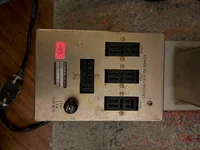
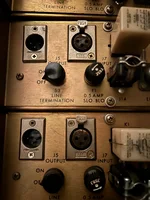
As an experiment, I tried sending some 1k tones thru the signal electronics with varying levels of success. Some of the amps were getting nothing, some we're making weird noises, some had signal jumping up and down. All of the xlr input jacks are covered in a lot of corrosion and after spending about 30 mins trying to clean them, it seemed better to just get replacements before diving deeper into the signal electronics. They are in pretty bad shape. The xlr cables never could get fully seated when trying to plug them in. I posted a pic below. It was hard to get the lighting right but I think you'll get the idea.
With no guarantee there is a healthy signal making it past the signal electronics xlr input (and these need to be replaced regardless due to their condition), I figured start there. Once that's sorted, I'll take more detailed stock of what is going on in there. Or maybe they'll all magically work! That would be cool.

And of course most of the vu lamps were burned out. Has anyone installed led's on theirs? I'd really like to get these lit up but the replacement bulb I found is $27.

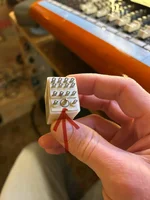
I got a new pinch roller installed, but the pinch roller is not engaging with the capstan. And since rewind isn't working either, I need to go ahead and get new relays to eliminate that as any issues. Would THIS one work? I'm not seeing the threaded screw on the bottom of the original relays on any of the relays online for sale. Pic of said screw/relay bottom is attached below. Before I go spend $80+ on 4 relays, I wanted to see if anyone could advise me on this. Also, if anyone has a more affordable, reliable relay that has worked for them, I'd be open. I obviously don't want to skimp here, but if I can save something, that would be nice.

Outside of that, I scored a scrape flutter idler from sweetbeats (thanks Cory!), and a NOS record head. Planning on sending the heads to John French soon when I have some fazools saved up. Also Dave Dintenfass has been helpful over email and sent a few parts to help get my pinch roller in action.

Lastly, I'm on the lookout for a torque delay and power booster as my machine doesn't have those. If anyone has a lead or would be open to selling, I'd be grateful.

Home recording slightly closer 🎙️
 

Attachments

  • IMG_6301.webp
    IMG_6301.webp
    127.1 KB · Views: 19
  • IMG_6304.webp
    IMG_6304.webp
    929 KB · Views: 19
Last edited:
I got the external psu sorted and power is now alive in the signal electronics. The tech that had previously worked on the psu took a second look and found a component on the underside next to the main filter cap that he mistakenly installed backwards on both psu's. I wish I remember what the component was buuuuut I don't as this was last week. But happy that it is now working.

Good deal! That component is likely a diode.

Was there any more to the main filter caps as far as testing and reinstalling the originals or leaving the replacements in place?

As an experiment, I tried sending some 1k tones thru the signal electronics with varying levels of success. Some of the amps were getting nothing, some were making weird noises, some had signal jumping up and down. All of the xlr input jacks are covered in a lot of corrosion and after spending about 30 mins trying to clean them, it seemed better to just get replacements before diving deeper into the signal electronics. They are in pretty bad shape. The xlr cables never could get fully seated when trying to plug them in. I posted a pic below. It was hard to get the lighting right but I think you'll get the idea.

With no guarantee there is a healthy signal making it past the signal electronics xlr input (and these need to be replaced regardless due to their condition), I figured start there. Once that's sorted, I'll take more detailed stock of what is going on in there. Or maybe they'll all magically work! That would be cool.

Those jacks look absolutely nasty…doesn’t make sense because I don’t see in-kind corrosion on other hardware/surfaces/components, but beware that may be an issue with which you’ll need to tangle; if there is corrosion on switch contacts, card edge connectors, etc. Aside from the XLR connectors, exercise the rotary LINE TERMINATION switch on the back, as well as the octal socket dummy plug…on the front exercise the plug-in PWAs, the source select paddle switch and the rotary mode control switch. You may need to apply contact cleaner to the switches and exercise them.

And of course most of the vu lamps were burned out. Has anyone installed led's on theirs? I'd really like to get these lit up but the replacement bulb I found is $27.

There are a lot of solutions out there, both incandescent and LED. I’m planning on converting my 16 modules to an alternate incandescent option, but it’s been years since I gathered the parts to do this so I can’t recall my plan…I need to find the parts to answer that question and dig back in emails I think from about 10 years ago. LEDs are always an option, the challenge is just that the power is +24V and that has to be stepped down to about +5V.

I got a new pinch roller installed, but the pinch roller is not engaging with the capstan…

And you are confident the pinch roller is the correct diameter? If you got it from Dave D. That’s all you need to say…I have no questions about the pinch roller if that’s the case. But first things to check is verify the pinch roller solenoid is seeing about +24V when engaged. Typically if it is moving when you hit PLAY, it’s getting +24V, so if that’s the case the next thing to check is mechanical impediment. Can you physically push the pinch roller all the way to the capstan shaft or can it not physically reach the shaft? If that’s the case check the check/adjust procedure in the manual.

…And since rewind isn't working either, I need to go ahead and get new relays to eliminate that as any issues. Would THIS one work? I'm not seeing the threaded screw on the bottom of the original relays on any of the relays online for sale. Pic of said screw/relay bottom is attached below. Before I go spend $80+ on 4 relays, I wanted to see if anyone could advise me on this. Also, if anyone has a more affordable, reliable relay that has worked for them, I'd be open. I obviously don't want to skimp here, but if I can save something, that would be nice.

The ones you linked will work fine but have features you don’t need. These ones should work fine:

https://www.mouser.com/ProductDetai...ety/MY4-GS-R-DC24?qs=iLKYxzqNS76Faumqfk7klA==

Outside of that, I scored a scrape flutter idler from sweetbeats (thanks Cory!), and a NOS record head. Planning on sending the heads to John French soon when I have some fazools saved up. Also Dave Dintenfass has been helpful over email and sent a few parts to help get my pinch roller in action.

Dave is a great human. So is John.

Lastly, I'm on the lookout for a torque delay and power booster as my machine doesn't have those. If anyone has a lead or would be open to selling, I'd be grateful.

Good luck. Finding those things loose and available is in hen’s teeth territory I’m afraid, but do keep on the lookout. The 1” AG-440 was relatively rare…not as rare as something like the MM-1000, but certainly way more rare than the 1/4”~1/2” AG-440. It’ll be a matter of trolling appropriate marketplaces and keeping watch for somebody that’s parting out an AG-440-8. The other thought is just to see how it functions without those boxes. Remember they are both there working in tandem to reduce the amount of time it takes for the transport to get to speed depending on the mode. If it doesn’t bother you how it is and it works, then you don’t “need” those assemblies. But “start time” was a spec studios cared about back in the day because time was money and having to increase your pre-roll so the playback, for instance, reached stable speed in time before the punch, or having to wait while the spooling speed crawled up, was frustrating and costly. So a transport that could jump to action was important and that’s why they added the boxes.
 
Good deal! That component is likely a diode.

Was there any more to the main filter caps as far as testing and reinstalling the originals or leaving the replacements in place?

It was a diode indeed!

Re filter caps, we ended up leaving the replacements in. He took a esr reading on the og caps and didn't seem enthusiastic with the results. When I saw the machine finally fire up, I figured the replacements are probably ok for now. If I run into issues down the line, I know the mallory caps are a proven route.

Those jacks look absolutely nasty…doesn’t make sense because I don’t see in-kind corrosion on other hardware/surfaces/components, but beware that may be an issue with which you’ll need to tangle; if there is corrosion on switch contacts, card edge connectors, etc. Aside from the XLR connectors, exercise the rotary LINE TERMINATION switch on the back, as well as the octal socket dummy plug…on the front exercise the plug-in PWAs, the source select paddle switch and the rotary mode control switch. You may need to apply contact cleaner to the switches and exercise them.

Ya it's odd, there's no corrosion anywhere else on the electronics or machine. The pots and switches are scratchy, I definitely will be getting in there with contact cleaner. The pots look sealed, so not sure if cleaning them is an option unless you know otherwise? The switches look like I can just go in from the front? I'll be exercising everything moveable and removable annnnd if issues still persist, moving down the line once I get the new xlr jacks replaced 🚂

There are a lot of solutions out there, both incandescent and LED. I’m planning on converting my 16 modules to an alternate incandescent option, but it’s been years since I gathered the parts to do this so I can’t recall my plan…I need to find the parts to answer that question and dig back in emails I think from about 10 years ago. LEDs are always an option, the challenge is just that the power is +24V and that has to be stepped down to about +5V.

Cool! Yes if you get around to it, I def would follow your lead for an alternate incandescent option. Seems simpler than installing led's

And you are confident the pinch roller is the correct diameter? If you got it from Dave D. That’s all you need to say…I have no questions about the pinch roller if that’s the case. But first things to check is verify the pinch roller solenoid is seeing about +24V when engaged. Typically if it is moving when you hit PLAY, it’s getting +24V, so if that’s the case the next thing to check is mechanical impediment. Can you physically push the pinch roller all the way to the capstan shaft or can it not physically reach the shaft? If that’s the case check the check/adjust procedure in the manual.

The guys who sold me the deck informed me the pinch roller came from Dave D, so that's a plus. As far as measuring 24v at the pinch roller solenoid, where would I take this reading? Do I need to open up the solenoid to do this? Or open up the control box? Or is there a better place to take get it? There's no visible terminals, just 2 wires coming out of the solenoid going inside of the control box (which I haven't opened yet). The pinch roller isn't moving at all when I press play. I can indeed physically push the pinch roller all the way to the capstan shaft which makes the reels turn.

Thanks for sending over the mouser link! I just ordered 4 relays 🥳

As for the torque delay / power assembly, I'm not holding my breath. I figured I'd ask here as a lot of ampex people have chimed in on this thread over the years. You're correct to wait and see how the machine functions without them. In the back of my head, I've been mulling over the transport getting worn out and tired being used without them. But if it really all just comes down to start up time, I can certainly live with that.
 
Re filter caps, we ended up leaving the replacements in. He took a esr reading on the og caps and didn't seem enthusiastic with the results. When I saw the machine finally fire up, I figured the replacements are probably ok for now. If I run into issues down the line, I know the mallory caps are a proven route.

I’m sure the replacements are fine…it’s not that they won’t work. It’s that the correct replacements are a much higher-grade part. Professional Ampex machines of this era are not revered for their sophistication. They are revered for their sound. The signal electronics power supply is the life blood of the signal electronics, and the quality of how they filter and slew can be impacted by those primary filter caps. I’m probably splitting hairs, but I would never consider replacing those large can computer-grade caps with standard small-can leaded parts. They’ll work fine. I just wouldn’t choose that for me.

Ya it's odd, there's no corrosion anywhere else on the electronics or machine. The pots and switches are scratchy, I definitely will be getting in there with contact cleaner. The pots look sealed, so not sure if cleaning them is an option unless you know otherwise? The switches look like I can just go in from the front? I'll be exercising everything moveable and removable annnnd if issues still persist, moving down the line once I get the new xlr jacks replaced

1768695082187.webp

What contact cleaner are you planning on using for the switches, and what kind are you planning on using for the pots?

The pots aren’t “sealed” per se, but there isn’t an easy way to get FaderLube in there like with other miniature pots where there might be an access hole. The thing to remember about cleaning pots is it isn’t just about getting cleaner in there, it’s about getting it in there, exercising, and then allowing it to drain, and then flushing and draining. And THAT’S all the quick and dirty way…the BEST way is to open the potentiometer up and actually clean the wiper and element. The pot body on the pots in the AG-440 signal electronics fastens to the element by 4 metal tabs that are wrapped over the back of the element. To remove the body you have to carefully pry up those tabs, straighten them and then just pull the body away, and then go to work cleaning. You want to use the correct type of cleaner, and you want to be gentle, especially with the wiper. This is the only way to really service the pots on the AG-440. I’ve heard of people drilling a small hole in the pot body so there is some access to jet whatever product you are using in there and then allow it to drain. I think this is a TERRIBLE idea…the risk of metal shavings getting in there. I just open them up and do a proper cleaning. Let me know if you need more details.

As far as the switches, I don’t know how you would actually ensure the contact cleaner gets to where it needs to go and be able to flush after exercising through the front…yes I suppose on the source select paddle switch, but you’re still not going to be able to see what you’re doing and ensure you are treating all the contacts. The switches are all open-frame type, and the top and bottom covers of the module come off with screws for service access, so there’s no excuse not to just lay a rag towel out, pull the covers off, set the open module on the towel, and actually put the cleaner where it needs to go, exercise, and rinse. And remember the LINE TERMINATION switch on the rear panel. These switches were made in an era when the standard for quality was much higher, and these switches can out-last much of what you will find in contemporary devices, but they certainly can oxidize, and since they are open-frame there is greater potential for infiltration by debris.

Cool! Yes if you get around to it, I def would follow your lead for an alternate incandescent option. Seems simpler than installing led's

Let me be clear, my plan wasn’t drop-in…the only drop-in solution of which I’m aware is if you find original bulbs, and yes they are very hard to find…Sylvania 33217 (“24PC”) 24V bi-pin base lamps. Again I’d have to take some time refreshing my memory on what my plan ended up being, but it was as much work or more than converting to LEDs…modifications to lamp mounting and modifications to the connection and wiring harness. And I chose incandescent because I like the look much better than LEDs, but LEDs are more practical. If I get around to digging up my own archives on this I’ll certainly share here.

The guys who sold me the deck informed me the pinch roller came from Dave D, so that's a plus. As far as measuring 24v at the pinch roller solenoid, where would I take this reading? Do I need to open up the solenoid to do this? Or open up the control box? Or is there a better place to take get it? There's no visible terminals, just 2 wires coming out of the solenoid going inside of the control box (which I haven't opened yet). The pinch roller isn't moving at all when I press play. I can indeed physically push the pinch roller all the way to the capstan shaft which makes the reels turn.

Okay. It’s been maybe 15 years or more since I’ve had my hands on an AG-440 pinch roller solenoid…my reference is the solenoid on my MM-1000, which is totally different. If it’s not moving at all don’t worry about trying to measure voltage at this point. The solenoids rarely fail, and you’ve got relays on the way. I say get those, install them, and see where you’re at.

Thanks for sending over the mouser link! I just ordered 4 relays

1768695082192.webp

Sure thing. Keep in mind the signal electronics use the same relay for the record relay mounted to the back of the module, so as you get into it, if you’re having issues with tracks not going into record or gremlins moving around with per-track record functionality/intermittency, you might want to consider replacing those 8 relays.

As for the torque delay / power assembly, I'm not holding my breath. I figured I'd ask here as a lot of ampex people have chimed in on this thread over the years. You're correct to wait and see how the machine functions without them. In the back of my head, I've been mulling over the transport getting worn out and tired being used without them. But if it really all just comes down to start up time, I can certainly live with that.

The lack of these things won’t impact the transport life or viability…it might make you tired if it is sluggish. :) My main concern was whether or not it would work at all without them, but you indicate it does, albeit with bugs to work out. I haven’t looked at AG-440-8 transport schematics in a long, long time, so can’t recall if the system depends on those assemblies, or if they just assist in parallel. I think it’s the former, which means modifications were made to your control box to allow the transport to function without the missing assemblies. So get it working and try it out and see what you think is my advice.

 
Last edited:
Just a quick check in here. I've been at work on the signal electronics and really should address these pots while I'm doing this. Sweetbeats, you mentioned you could provide more details cleaning them (in addition to the helpful info you provided back in January). What would you recommend for a cleaner?
The pots aren’t “sealed” per se, but there isn’t an easy way to get FaderLube in there like with other miniature pots where there might be an access hole. The thing to remember about cleaning pots is it isn’t just about getting cleaner in there, it’s about getting it in there, exercising, and then allowing it to drain, and then flushing and draining. And THAT’S all the quick and dirty way…the BEST way is to open the potentiometer up and actually clean the wiper and element. The pot body on the pots in the AG-440 signal electronics fastens to the element by 4 metal tabs that are wrapped over the back of the element. To remove the body you have to carefully pry up those tabs, straighten them and then just pull the body away, and then go to work cleaning. You want to use the correct type of cleaner, and you want to be gentle, especially with the wiper. This is the only way to really service the pots on the AG-440. I’ve heard of people drilling a small hole in the pot body so there is some access to jet whatever product you are using in there and then allow it to drain. I think this is a TERRIBLE idea…the risk of metal shavings getting in there. I just open them up and do a proper cleaning. Let me know if you need more details.
 
I wasn’t talking necessarily about the cleaner…the details have to do with how to get the pots apart. I’ll see what I can do for you this week. But FWIW on those pots I use DeoxIT F5 FaderLube. They’re high-quality pots, BTW.
 
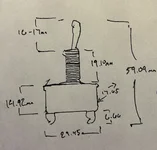
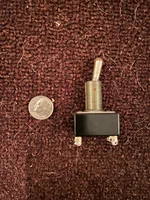
The transport just started blowing fuses (right side fuse of the two fuses if your facing the back of the transport). Through some bench testing/tracing, I narrowed it down to the mains power switch. I've been looking for a replacement but am not having any luck due to the unique size of this part. Anyone have an ideas for a replacement? The original part that was in there is a Arrow-Hart, 3A 250v / 6A 125v with 15/32-32 threads. I measured 19mm of the threaded part while the actual switch itself is 16-17mm. Since the 440 switches are recessed, getting one long enough to reach from the control box through the face plate would be ideal. From where the switch mounts/bolts in the control box to where the top of the switch pops out of the faceplate is around 26-27 centimeters. Quite a lot of recession.
 

Attachments

  • IMG_6465.webp
    IMG_6465.webp
    543.6 KB · Views: 3
  • IMG_6464.webp
    IMG_6464.webp
    1.6 MB · Views: 4
Back
Top