how do I build a padded armrest?
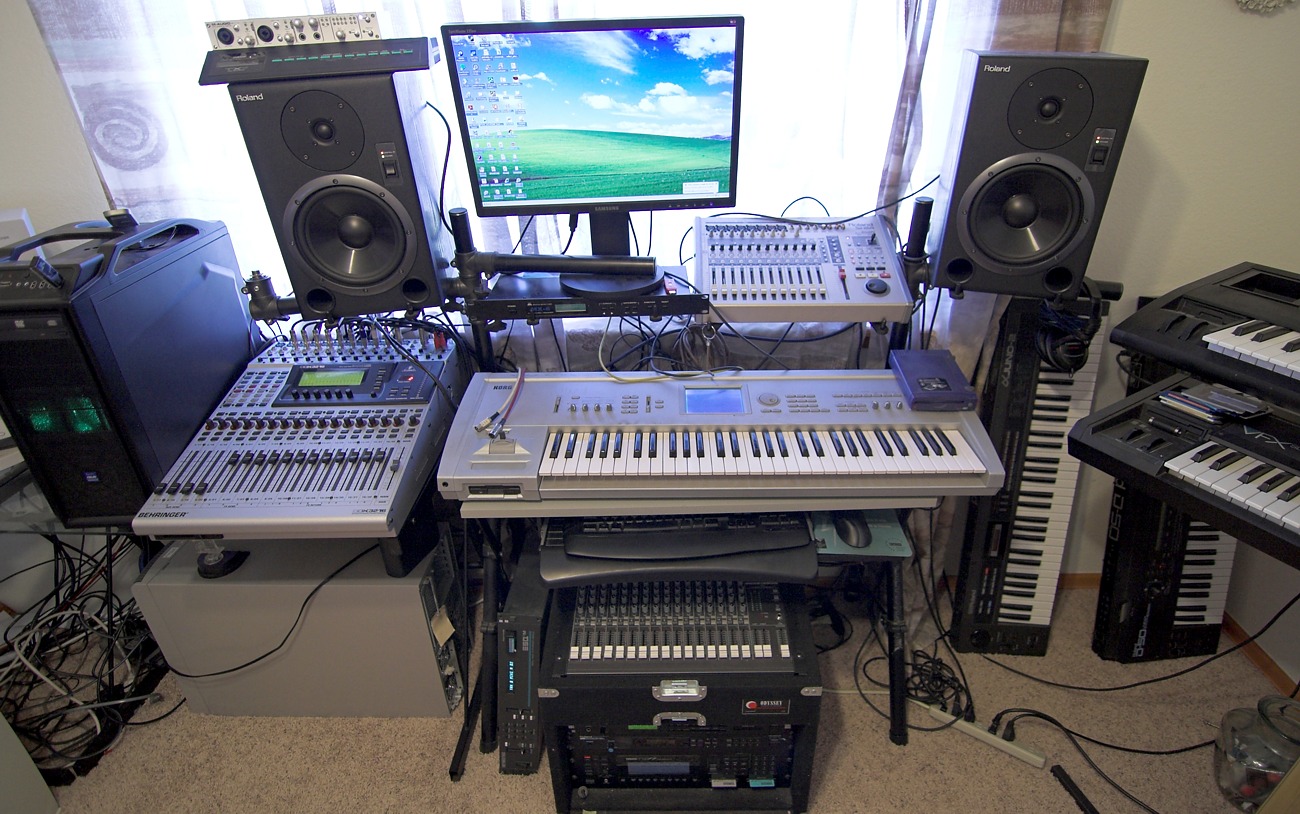
Well, heres how I made mine. Although, because mine required precision clearances for a linear motion track/carriage, the angle of the mixer, and the existing steel support brackets, I had to machine a plank of Poplar to an exact profile. Here is the carriage, which is for my computer keyboard, mouse, tracking sheet and other things...like a glass of beer. I have 4 different trays that slip into a bracket on the carriage. This is the keyboard tray.
And once the pad was in place, the clearance.
And because this plank is 6 1/2" wide, to machine the primary face took a machine that most people don't have access to. Fortunately, i DO. Its called a Powermax sander.
Once the angle was established and machined, then I determined the profile and dados. machining using the test peice.
Then I cut a small section to use as a test piece, to experiment with the pading profile. First, because I used this product in past projects, I knew it had the proper "resiliancy". Its simply a foam sleeping bag pad, which I bought at Walmart. Cheap.
Then I rolled it out and cut it into long strips wider than the profile, which allowed for trimming once glued to the profiled plank. I used Contact cement on both pieces which worked great.
I use a piece of veneer to spread the contact evenly.
Here is some tests I did just to see how well this stuff would "bend". First, back on itself.
Then around a piece of 1/4" Masonite, which I thought I might have to fasten to the plank.
But once I did it on the test piece alone, I saw that I didn't need the masonite. This is why I test things.
Once I wraped the oversizsed pad, I used a utility knife to trim off the pad flush with the bottom. Notice the little wood cleat at the back edge. This is to allow the naughyde to have a nice firm sharp edge.
Also note the "T-nut". I predrilled holes for 1/4" bolts to fasten the wristpad to the console from undernieth through the support bracket. The Tnuts are threaded so the pad can be cinched up real tight with the bolts. You have to redrill the pilot hole with a Spade bit to allow the face of the Tnut to end up flush with the top face of the plank. Also, the Tnut has a "barrel" which is the actual nut, and you have to drill out the 1/4" pilot hole about a 1/2" deep for it to fit. Then simply drive them in with a hammer. Sometimes, I use thraded inserts, but not here. I did use threaded inserts on the endcaps though.
Ok, now for the naughyde. Because my wristpad is over 100" long, and Naughyde comes in 54" wide rolls, I didn't want to buy a continuous piece. I simply bought one yard, cut it in 10" wide strips, and had my wife sew three peices together end to end with a double backed stich on each side of the joining stich. Then I had one long piece to wrap the plank with.
Again, now I "test" the stretch of the naugahyde I selected at a local fabrics store.
I oversised the dado to allow the naughyde to completel wrap the front and rear edge and hide the staples.
Once it worked on the test piece I knew it would work on the real deal.
Here is fit test, to guarantee the clearances and dado depths were correct. before making the real wrist pad.
Btw, here is the OLD endcaps, before I modded the console for a Tascam 3700 mixer.
Because of the depth front to bac,k was much deeper, I had to make new endcaps also. Here is the new one with the pad.
And here is the finished pad in place.
Well, thats how I did it. Hope it helps.