What's the most neutral sounding mic below 1000$?

  • Thread starter Thread starter plautus
  • Start date Start date
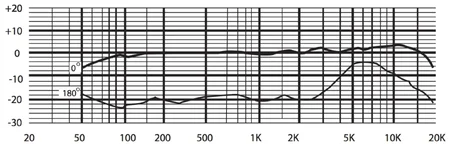
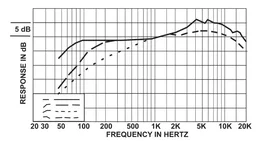
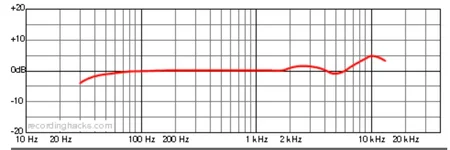
I've got a Behringer and another similar one somewhere that I used to use for PA setting up, but I have long held the belief that mics do have something weird going on with them, over and above a simple frequency/amplitude plot. Has anyone ever bought a microphone that has a specific plot that was very similar to another mics and heard two totally different beasts? Science tells us our ears cannot detect a less the 2dB change in level, so seeing perhaps a little bump at 5K, you imagine this and then discover you have a rather thin and weak sound, yet another mic with virtually the same trace on the graph behaves much better on the voice you have? We treat these graphs as solid science, yet clearly, mics sound different - and often the little bumps and dips are 2dB or less up or down, so we should not be able to hear those? Here are three graphs - they are currently on sale for £30, £500 and £4500. I can't tell which is which?
 

Attachments

  • Screenshot 2026-07-08 at 09.23.47.webp
    Screenshot 2026-07-08 at 09.23.47.webp
    14.4 KB · Views: 4
  • Screenshot 2026-07-08 at 09.21.06.webp
    Screenshot 2026-07-08 at 09.21.06.webp
    57.6 KB · Views: 4
  • Screenshot 2026-07-08 at 09.22.56.webp
    Screenshot 2026-07-08 at 09.22.56.webp
    15.6 KB · Views: 4
Way back in 2010, Harvey Gerst did a cheap mic shootout and the Behringer ECM-8000 was one of the mics he tested. That was one of the first threads I read when I joined this site several years ago. Long story short, I bought the Behringer and MXL V67g. I thought his analysis and tests were very insightful and well done.

Harvey Gerst Mic Test
 
One problem with looking just at the published mic response graphs is that they are smoothed out to a large degree. I took a short section of a song, and looked at the response curve at 3 different level of smoothing. If this was going in a microphone sales brochure, which do you think they would choose? You never see a company say 1/3 octave smoothing or 1 octave smoothing, and if it moving averaged or Gaussian. There are multiple ways to analyze data!

Precise.webp
Med Precision.webp
Lo Precision.webp
 
It always amazed me that most audio gear has specs shown like 20-20kHz +/-.01dB, but just about all microphones say 20-20kHz... with no deviations spec. You look at the graph (already smoothed) and there's a +5dB peak at 8 or 10kHz and the bottom end is rolled off 3dB at 40Hz and 10dB by 20Hz.

This is the chart of a $1300 mic by a major manufacturer. 20-20kHz spec. It really tells you a lot, doesn't it.

1783518148174.webp
 
If you are singing, you will find a dynamic hyper to be much more useful. You got that 6" of distance to work with and a microphone technique in that range.

I don't see intimate recordings from a LDC, just sound reinforcements. Like you cannot stand back and sing rock n roll.
 
It always amazed me that most audio gear has specs shown like 20-20kHz +/-.01dB, but just about all microphones say 20-20kHz... with no deviations spec. You look at the graph (already smoothed) and there's a +5dB peak at 8 or 10kHz and the bottom end is rolled off 3dB at 40Hz and 10dB by 20Hz.

This is the chart of a $1300 mic by a major manufacturer. 20-20kHz spec. It really tells you a lot, doesn't it.

View attachment 152914
This is exactly the snag - flat response through the primary range then all above a bit brighter. Some of the others seem to have bad piano responses - as in where some strings seem to ring out differently to the neighbours - making chords sound a bit odd. That trace shows an audible increase - 4dB or so Above 5K doesn't do much for male voice, far more for female and for instruments make a big difference. Enough to make people go wow, a nice mic, but would they have said the same if you had just done the same thing with the EQ?
 
Back
Top